
One of the toughest reach is having a consistent OTR plan in the long haul trucking world. It’s not just about miles covered — it’s about piecing together DFTA compliance, ETA rules, and safety regulations into a whole, real-world idea. Many drivers fail not due to poor driving skills, but because their trip planning ignores one of these factors.
This guide shows you the steps you need to take to create an OTR trip plan that protects your hours of service, keeps ETAs realistic, and avoids fatigue-related errors — without any constant violations, log edits, or conflict with dispatch at the last minute.
In long haul planning, success depends not on pushing limits, but on aligning legal boundaries, realistic timing, and safety-driven decisions into one consistent system.
Most Drivers Have Been Transporting the Wrong Way When They Start on the Road
Most long haulers fall -long planning mistakes up before the truck even starts moving. Very often, truckers are using routes based on assumptions of perfect conditions, rather than concerning themselves with real-world issues.
Here are the most common reasons why OTR plans fail:
- Daily driving capacity was overestimated
- The total amount of the non-driving time was not taken into account (fuel, traffic, weather, detention)
- The ETAs built were 100% of the available HOS consumed
- Safety was treated as “adjustable” when delays occurred
When just a single delay appears, the whole driver workflow falls apart resulting in HOS violations, missed appointments, or unwise driving decisions.
Why OTR Plans Fail in Real Operations
| Planning Element | What Drivers Assume | What Happens in Reality | Resulting Risk |
| Daily driving time | Full 11 hours usable | Traffic, weather, fueling reduce it | HOS violations |
| Non-driving time | Minimal or predictable | Detention, congestion, weather delays | Missed ETA |
| ETA construction | Based on speed limits | Based on average speeds | Dispatch pressure |
| Safety margin | Optional | Essential | Unsafe decisions |
| Schedule buffers | Not needed | Always required | Fatigue accumulation |
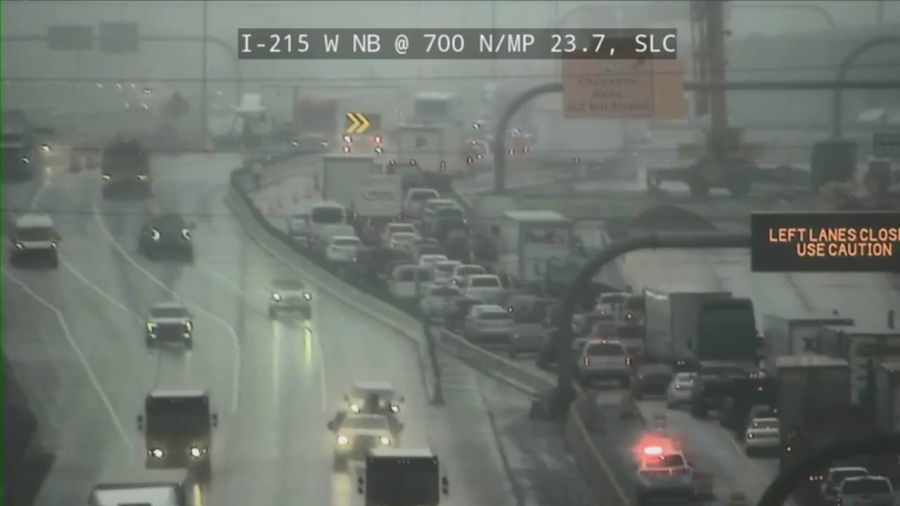
A correctly designed safe driving plan should expand by margins, not maximums.
A Legal and Safe OTR Plan Has Three Legs
Every compliant OTR plan is based on three irreplaceable terms:
1. HOS Compliance (Hours of Service)
The hours of service you have are the rock-solid limit. It is not possible to “fix them later” without violations.
HOS limitations to plan around:
- 11-hour driving limit
- 14-hour on-duty window
- 30-minute break requirement
- 70-hour weekly limit
HOS Limits vs. Safe Planning Targets
| HOS Rule | Legal Maximum | Recommended Planning Target | Why It Matters |
| Driving time | 11 hours | 8.5–9.5 hours | Buffer for delays |
| On-duty window | 14 hours | 12–13 hours | Prevents clock pressure |
| Break requirement | 30 minutes | Planned break window | Avoids forced stops |
| Weekly limit | 70 hours | 60–65 hours | Fatigue prevention |
| Available margin | 0 hours | 1–2 hours daily | Compliance protection |
A plan that consumes 100% of available HOS is already broken.
2. ETA Rules and Travel Time Estimation
Estimated time of arrival has to reflect the real feared highway conditions and NOT dispatch pressure.
ETAs should take into account:
- Average speed, not speed limit
- Terrain and congestion
- Weather exposure
- Mandatory breaks and stops
3. Safety Regulations
Transportation safety does not back up the plan— it is the plan.
Safety regulations include:
- Fatigue prevention
- Weather-based route decisions
- Legal parking access
- Compliance with driving laws
Any plan that requires unsafe driving to “save the ETA” is invalid.
Step 1: HOS, Not Miles, Is the Starting Point for OTR Planning
The proper sequence of OTR planning is:
HOS → Safety → Route → ETA → Dispatch confirmation
Many drivers, however, reverse this order and pay the price later.
Step 2: The Real-Life Reality of a Truck Driver Schedule
A sustainable truck driver schedule must be built to absorb delays, not collapse under them, especially during multi-day OTR operations.
After HOS compliance has been laid down as the primary plan of action for OTR, the next trial is coming up with a truck driver’s timetable that can withstand actual operating conditions. Usually, planning issues occur in long-haul transport, not because numbers are misinterpreted, but rather it is due to drivers greatly underestimating the extent to which schedule breaks occur due to delays.
To be in compliance, a schedule must reckon that something will go wrong. Traffic, weather, shipper delays, slow fueling, or parking shortages are not exceptions — they are the core challenges faced in logistics daily. Therefore, optimization of trip planning should be setting not a goal of moving from zero to the maximum driving time but a goal of decreasing driving time variability.
A typical stable OTR schedule will involve a planned driving time not exceeding 8.5–9.5 hours a day, even though the law allows 11 hours. Thus, the emptiness of time left is a hidden resource to be used for dealing with unforeseen situations and managing fatigue.
The estimation of travel time is also considered as a primordial. The creation of the wrong dispatch spectrum such as estimating delivery times on the basis of speed limits instead of realistic averages has negative consequences.
A reliable estimated time of arrival is not a promise to dispatch, but a calculated outcome based on realistic driving conditions and legal limits.
In addition to this, the schedule must most importantly comply with the rule on driver fatigue prevention. The stacking of long days back-to-back without recovery leads to low alertness, slow reactions, and safety issues.
When truckers adopt scheduling as a tool to prevent accidents rather than a mechanism to increase productivity, they achieve consistency in the long run.
True trip planning optimization reduces variability and stress, rather than attempting to extract the maximum possible miles from every available hour.
Step 3: Route Planning Safety & Handling Together
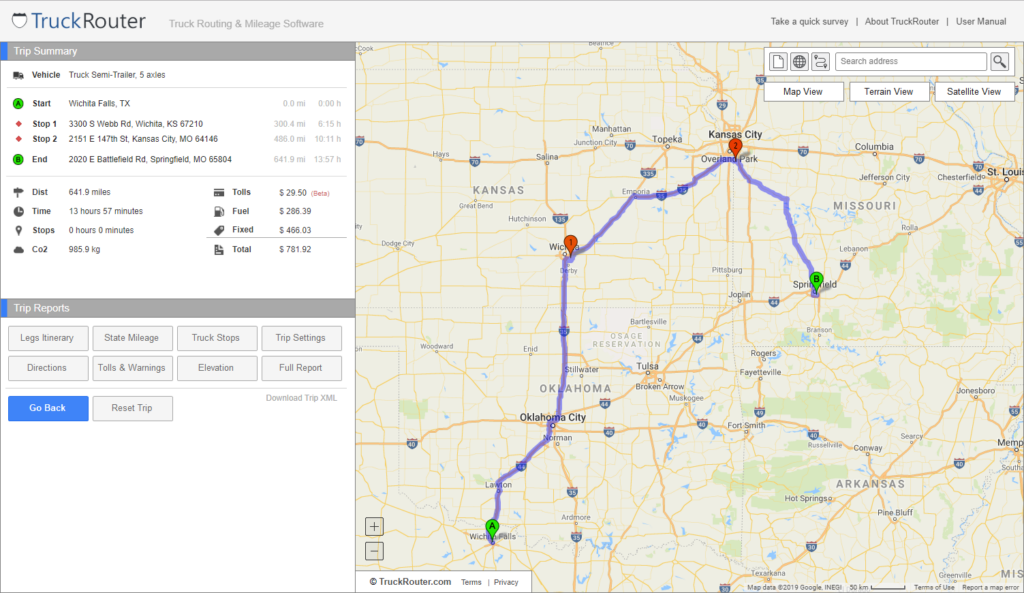
The entire concept of effective route planning in OTR trucking changes from a focus on the shortest path to a comprehensive route that is committed to transportation safety and full legal compliance throughout the process.
Trenching route decisions into trucking industry regulations ensures that compliance is built into the plan instead of being enforced after violations occur.
Route planning that is aware of safety includes more than simple math. Terrain, weather patterns, urban congestion, parking density, etc., all determine whether a route is operationally viable.
An effective OTR plan weaves safety laws directly into routing decisions. If a route necessitates nighttime driving, restricts legal parking places, or requires passing through adverse weather to meet an ETA, the plan is not compliant—even if it looks legal on paper.
This is where logistics management and route planning intersect. Dispatchers and drivers who communicate effectively about routing constraints achieve better long-term performance than those chasing theoretical efficiency.
Step 4: ELD Compliance, Dispatching, and Realistic Execution
Implementing an OTR plan without comprehending electronic logging device (ELD) compliance is basically unreal. The ELD is not simply a compliance screen; it is an integrated feedback system for the entire trip.
ELD compliance helps drivers maintain control of remaining on-duty time and avoid last-minute corrections.
Execution also depends heavily on dispatching communication. Unrealistic ETAs are the primary source of pressure.
OTR Plan Execution — Driver vs Dispatch Alignment
| Execution Area | Poor Practice | Professional Practice | Outcome |
| ETA setting | Optimistic promises | Realistic estimates | Fewer conflicts |
| ELD usage | Reactive corrections | Proactive monitoring | No violations |
| Dispatch communication | Last-minute changes | Early transparency | Trust |
| Route adjustments | Forced completion | Safety-based changes | Compliance |
| Freight management | Pressure-driven | Plan-driven | Stable delivery |
Effective freight management relies on transparency between drivers and dispatch, where safety constraints and time limits are treated as operational inputs, not obstacles.
Moreover, plans must remain flexible.
Accurate travel time estimation protects both compliance and safety by preventing unrealistic expectations that often lead to HOS violations and fatigue-driven decisions.
In trucking, compliance is not achieved by intention alone, but by executing a plan that respects legal limits, human limits, and real-world conditions at every stage.
Watch Practical Trucking Tips
Below are some on-road tips from experienced truckers that support the planning strategies in this article:
Top 10 Tips for Winter Trucking Prep! ❄️ 🚚
FAQ: OTR Planning, HOS, ETA, and Safety
In what way does operating on an OTR plan air HOS violations in real operations?
A properly designed OTR plan originates from hours of service, not from miles. When driving time, breaks, and on-duty limits are planned with buffers instead of maximums, HOS compliance is a natural outcome and not a daily struggle. The majority of violations occur not because drivers disregard rules, but because the plan is too tight to accommodate unforeseen circumstances.
Why are unrealistic ETAs the main cause of safety and compliance problems?
It is unrealistic ETAs that cause drivers to work constantly under the time pressure. When arrival times are calculated using speed limits instead of average speeds, the plan silently requires unsafe driving to stay “on time.” This is a direct attack on commercial vehicle safety which, in turn, increases the chances of drivers being fatigued, making rushed decisions, and having log violations.
Can an OTR plan remain flexible and still comply?
Yes. A firm OTR plan is designed to be flexible. The flexibility is provided by reserving the unused HOS, planning a conservative daily mileage, and identifying alternative parking and routing options the early stage. Flexibility does not mean improvisation; it means controlled adaptation within the legal limits.
How does ELD data facilitate better trip execution?
ELD data provides real-time visibility into the remaining driving time, on-duty limits, and weekly hours. Drivers who actively use the ELD information during planning can instead of the risky decisions late in the day, adjust their routes, ETAs, and stops early. This turns compliance into a planning tool instead of a correction mechanism.
What is the relationship between dispatch communication and safe OTR planning?
Aligning dispatch is key. When drivers communicate their OTR plan using realistic travel time along with safety constraints, dispatch is more likely to support the schedule changes as well. The clear communication reduces dispute, saves the last-minute rush, and makes freight management better off for both sides.
Does safety provide a constraint or is it a planning advantage in long-haul operations?
Safety is not a limiting factor instead it plays a part of a stabilizer. Plans that are based on fatigue prevention, legal parking, and weather-routing tend to be consistent and outsmart aggressive plans in the long run. Commercial vehicle safety leads to on-time delivery with fewer violations and better driver reliability.


