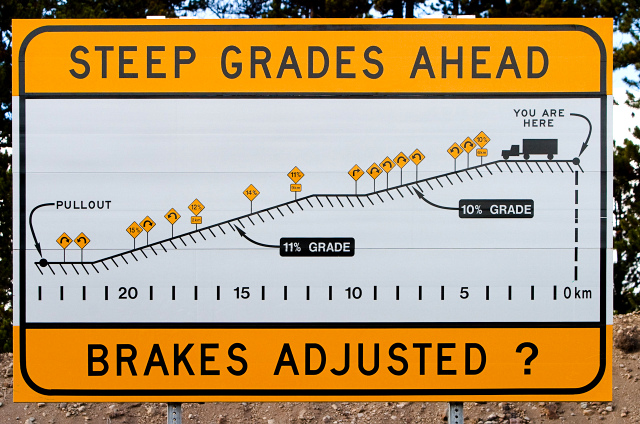
Driving on mountainous roads is a true performance assessment of a truck driver’s discipline and planning skills. The long steady climbs that drivers have to make, the steep grades, the lack of oxygen, the treacherous road conditions, and only a faint hope of recovery make the mountain roads hard to manage. Problems such as minor planning mistakes that escalate into safety issues like brake failures or massive fuel losses are commonplace. Unlike flatland, the mountains do not allow for any deviations from the plan. All choices — engine speed, gear choice, fuel strategy, and prescribed stopping areas — are to be made at the onset of the climbing task.
For truck drivers, the process of mountain ascent planning goes beyond racing uphill or showing off technical skills. Focusing on the vehicle’s operational features, substituting high temperatures that affect brake systems on the downhill journey, dealing with fuel consumption on steep slopes, and finding safe places in the mountains to park the truck are some of the focuses of this guide. It is the first step in the vehicle driver learning how to implement the descent safely to mountain driving which is no longer a high-risk job. Planning mountain routes is a foundational safety step that determines how the truck will behave under sustained load, elevation changes, and braking stress.
The Special Requirements That Come With Mountain Driving Planning
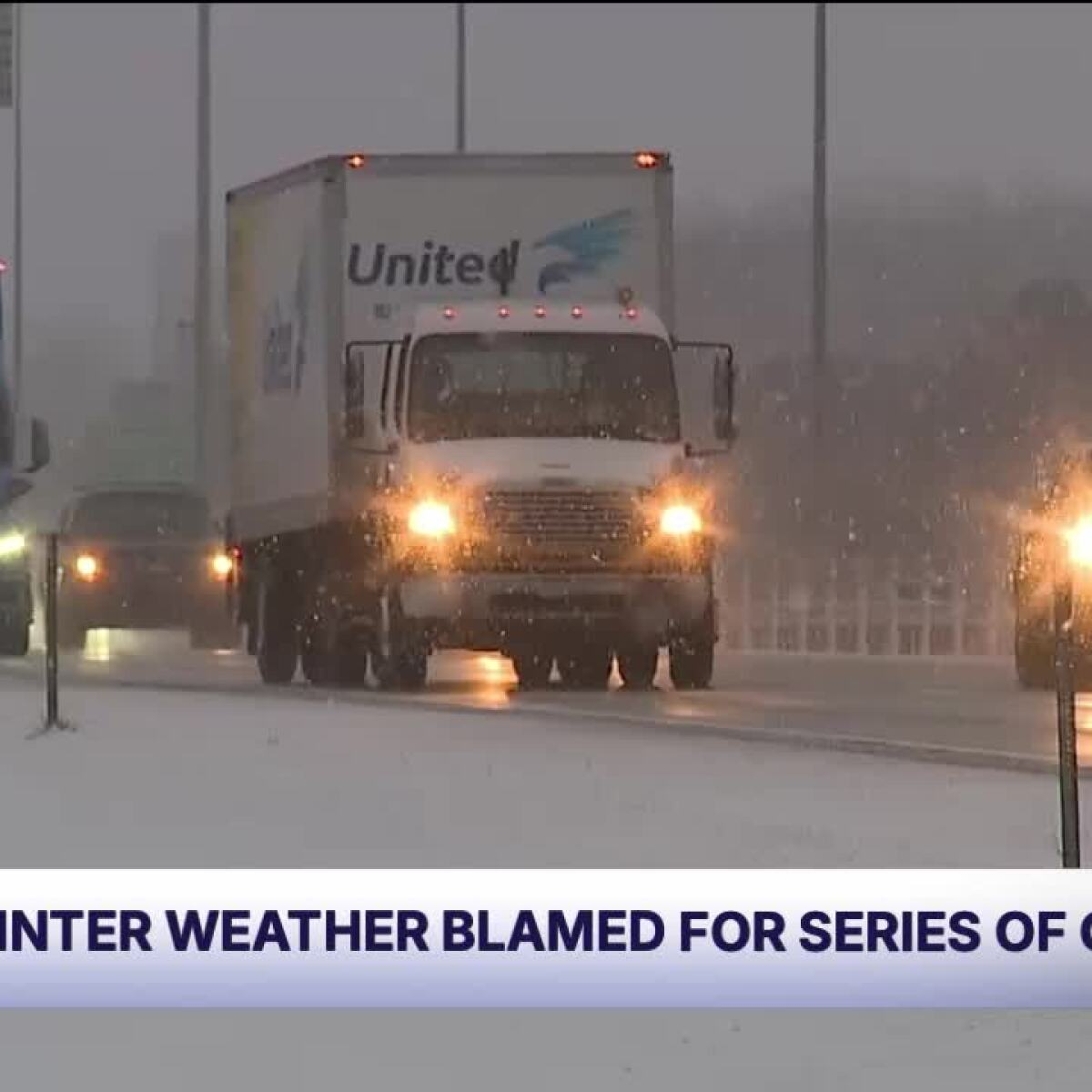
Road safety at mountain zones differs from that at conventional highways. An example of that would be on inclines when the truck is pulling against gravity, while on declines gravity is always on your side. The increase in engine load, brake systems hitting thermal stress, the vehicle performs differently at high altitudes, and the weather conditions change road textures can bring about rapid deterioration.
The Main Results of Insufficient Planning
- Loss of braking efficiency during the braking in the incline section
- Excessive fuel consumption on climbs
- Loss of speed or overspeed on long grades
- Missed or unsafe stopping zones
- Overheating engine or power loss during driving on the height
Safety tips on mountain driving reduce the need for reaction and emphasize pre-planned execution. These safe driving tips focus on prevention through preparation rather than correction after problems appear.
Planning Mountain Routes Before the Climb
The key to successful mountain route planning is getting ready well before the first incline. A route map that shows well may catch you off guard with unbearable grades, barely any shoulders, and a lack of safe zones.
The Good Planning Belongs To
- Percentage and distance of the climbs and descents
- Truck-specific speed restrictions
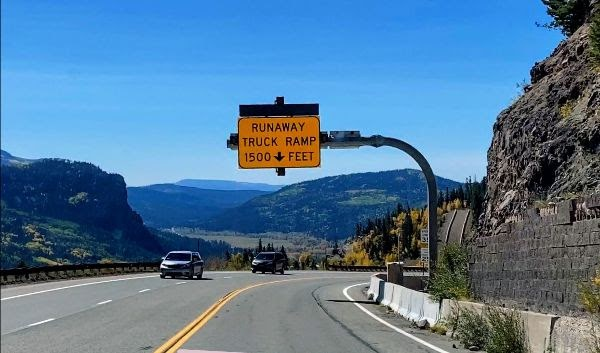
- Availability of runaway ramps
- Designated safe mountain stops
- Road conditions and seasonal closures
Driving steep grades safely is not about choosing the shortest path — it is about choosing the most manageable one. Driving steep grades safely requires advance decisions on speed, gear selection, and stopping strategy rather than reactive corrections on the road.
5 EXPERT Mountain Driving Tips For Truckers
Speed Control in Mountainous Sections
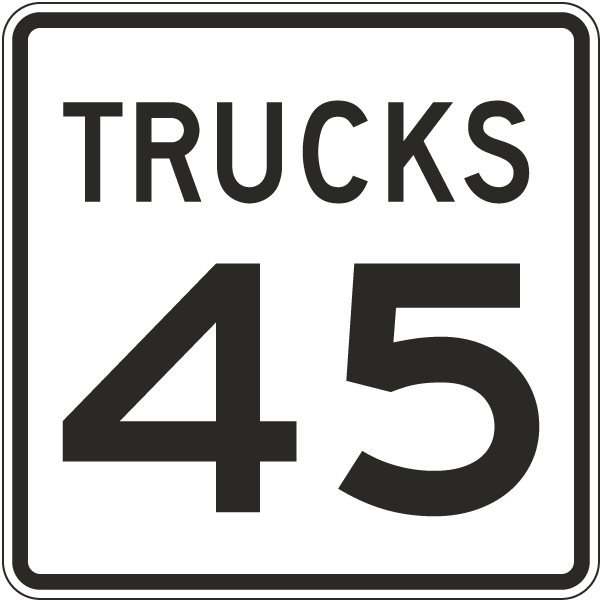
Speed control in mountains is preventive, not corrective. When a fully loaded truck goes down the hill, it will be much harder to control it without forcing the brakes. Effective speed control mountains strategy starts before the descent and relies on discipline, not reaction.
Driving Uphill
When driving uphill in mountainous terrain:
- Choose the right gear before the moment of inertia takes over
- Accept slower speeds instead of forcing out power
- Avoid unnecessary downshifting that causes an increase in fuel consumption
Riding uphill well is not contrary to frequently stable RPM, it is a crucial rule.
Driving Downhill
When driving downhill:
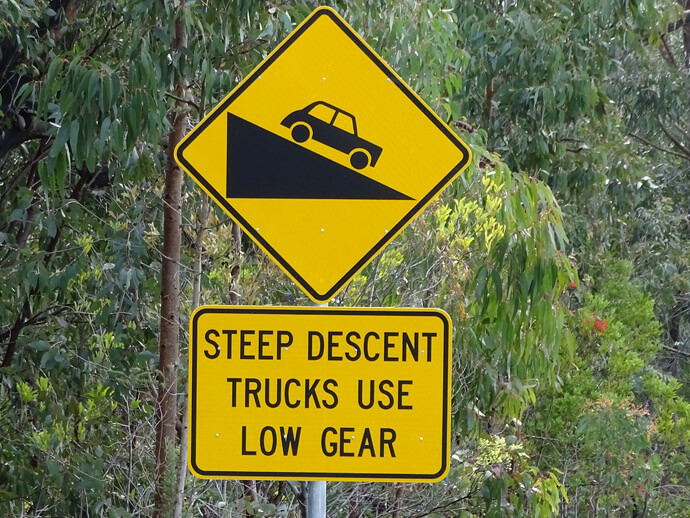
- Use the same gear on the way down that was used to climb
- Use engine braking as the primary control method
- Keep speed well below posted limits
Posted speed limits in mountainous terrain should be treated as maximum boundaries, not target speeds for heavy vehicles.
Speed control in mountains is about never allowing speed to build.
Fuel Consumption on Steep Hills
Fuel consumption on inclined grades behaves differently than on flat terrain. Stepping on the gas hard while going up and using the brake while coming down create two scenarios that would otherwise not have occurred. Fuel consumption steep hills behavior is directly influenced by throttle discipline, gear choice, and pre-planned fueling decisions.
Fuel-Efficient Mountain Driving Includes
- Smooth throttle application during ascents
- Avoiding over-revving engines
- Using engine brakes instead of heavy service braking
- Planning fuel stops before mountain passes
Fuel consumption on steep hills is a non-linear phenomenon. In the absence of planning, fuel use may independently increase even the shortest distances in a straight line.
Gear Selection for Mountain Driving
In a mountainous region, gear selection is not a performance option, it is a matter of safety. Proper gear selection mountains practice is a safety mechanism that stabilizes speed, protects brakes, and controls engine load.
Best Practices for Gear Selection in Mountains
- Downshifting early during ascents
- Never downshifting mid-descent under braking
- Maintaining RPM within safe operating ranges
- Avoiding neutral coasting
Correct gear selection protects brakes, stabilizes vehicle performance, and reduces mechanical wear.
How Trucks Handle Steep Mountain Passes: The Engineering and Skill Behind Safe Mountain Driving
Descent Braking and Brake Management
Descent braking is where most mountain-related failures occur. Overheated brakes lead to fade, loss of stopping power, and runaway scenarios.
Safe Descent Braking Principles
- Use engine brakes continuously
- Apply service brakes firmly and briefly, then release
- Never ride brakes downhill
- Monitor brake temperature when available
Effective descent braking relies on controlled intervals, not constant pressure.
How to safely bring a loaded semi truck down a mountain | Loud jake brake | Beautiful scenery
Safe Stopping Zones in Mountainous Terrain
Safe mountain stops are limited and must be identified in advance. Just like a flat road, you may not be able to pull over randomly, which can be dangerous.
Safe Zones Include
- Designated truck pull-offs
- Engine brake check areas
- Rest stops before and after major grades
- Emergency ramps (last-resort only)
It is not wise to rely on a stopping zone to be there when you need it. Safe mountain stops have to be planned before entering the mountainous sections. Mountain pass planning ensures that speed, fuel, braking strategy, and stopping zones are aligned before entering high-risk terrain.
High Altitude Driving and Vehicle Performance
When driving at high altitudes, the engine loses power and runs hotter due to lower cooling efficiency. Most drivers do not realize how great an impact altitude has on vehicle performance. High altitude driving introduces power loss and thermal challenges that must be accounted for during route and speed planning.
Planning This Is Necessary at Higher Altitudes
- Accept that you will have reduced horsepower
- Allow for a longer time of climbing
- Monitor the engine temperatures
- Avoid aggressive acceleration
The possible changes in vehicle performance due to altitude call for different planning.
Vehicle Safety Checks Before Mountain Routes
Mountain routes quickly reveal mechanical defects. That is why vehicle safety checks are of utmost importance.
Essential Checks Include
- Brake system integrity and air pressure
- Cooling system condition
- Transmission functionality
- Tire pressure and tread depth
The minor issues that occur on flat roads can have major effects in mountainous driving.
Rest Stops, Fatigue, and Mountain Safety
Driving a truck in steep mountains requires a lot of effort to maintain a high level of concentration and physical control to avoid the hard risks that fatigue brings. Traffic accidents are not usually associated with mountainous terrains but can be severely affected through driver fatigue.
Plan Rest Stops
- Before long ascents
- After extended descents
- At designated mountain rest areas
Fatigue in combination with mountainous terrain is one of the main reasons for severe incidents.
Typical Mountain Planning Mistakes
The most typical planning mistakes are:
- Accelerating much too fast on dropping ranges
- Dependence on service brakes
- Fuel planning being overlooked
- Dodging safe zones
- Views of mountains being the same as highways
The main problems within mountain road safety are often related to the plan rather than driving skills.
Planning Overview Table
| Planning Element | Poor Planning Outcome | Proper Planning Result |
| Speed control mountains | Brake overheating | Controlled descent |
| Fuel consumption steep hills | Unpredictable burn | Stable efficiency |
| Gear selection mountains | Loss of control | Engine stability |
| Safe mountain stops | Emergency braking | Planned recovery |
| Route planning | Surprise hazards | Managed terrain |
Conclusion: Mountains Reward Planning, Not Speed
Driving through mountainous roads is not about your ability but rather about how prepared you are. Speed control, fuel efficiency, living in a safe zone, and braking during the descent are not choices that are made on the road; they are made even before the climb starts.
Truck drivers who value the safety of mountain roads are those who plan each gear change, each fuel stop, and each stopping zone in advance. Thanks to their discipline, they not only keep their vehicles but also secure themselves and their load — they make the whole mountain driving an orderly and therefore predictable situation. Planning mountain routes is the secret to making every mile predictable rather than reactive.
Mountains are not places where safety is achieved through reaction.The secret is in planning each mile ahead.
FAQ: Planning Mountainous Sections for Truck Drivers
Why is planning mountainous sections more important than driving skills alone?
Climbing mountains by vehicle is a situation where no second chance is granted if a decision is taken incorrectly. The driver has to determine the speed control, gear choice, fuel strategy, and brake zones before the climb. Even the best of drivers can have brake failures, fuel losses, or loss of control if the planning is not good. In the mountainous terrain, preparation is more important than reaction for safe driving.
What is the connection between speed control and safety during driving on mountain roads?
In mountains, speed control is a preventive measure rather than an emergency one. Entropy of driving speed on long downhill slopes results in brake overheating and the driver loses the stopping power. Smart planning keeps the speed well below the posted limits and relies on engine braking to ensure the descent is controlled and not emergency braking situations.
What is the reason for increase of fuel consumption in hilly roads?
The fuel consumption on hilly roads is not linear, and there will be big rises in it if the throttle is not controlled well and unnecessary downs are taken. Fuel burn goes high due to rough acceleration on the hill climb and excessive braking on the hill descent. A planned fuel strategy and smooth throttle use together will stabilize consumption, even on long grades.
What is the importance of gear selection in the safety of mountain driving?
Gear selection is a safety mechanism in mountainous terrain, and it’s not just a performance choice. It is important to select the right gear before the ascent and keep the right gear at downgrades, which balances speed, protects brake systems, and cut down on mechanical stress. Wrong gear selection is one of the main reasons for losing control on the slopes.
Why should the safe stopping zones be planned in advance?
In the mountains, the areas with safe stopping zones are few and unreliable if one does not plan them in advance. The plan must include pull-offs, brake check areas, rest stops, and emergency ramps that should be located ahead of the route. Entering a roadway where one has to stop and get disturbed to find quick safe parking spots usually ends up being unsafe or unavailable.
How does high altitude affect truck performance?
The truck’s performance at higher altitudes is generally worse because the engine intake and exhaust gases are less dense and the engine operates under higher thermal stress. This will impact the climbing speed, fuel consumption, and engine temperature. The planning phase should factor in reduced power output and the wasted time from heating, and then make proper adjustments.
Why are mountain routes not comparable to highways?
Mountain roads are so different from highways that they have gravity that constantly works against the vehicle. Inclines raise the engine load, while declines stress the brake system. Weather, elevation, and scarce recovery zones compound tiny planning mistakes into significant safety problems, making it dangerous to assume highway driving techniques hold.
What are the most common planning mistakes in mountainous driving?
Although many drivers think these mistakes, they also share the burden of more basic ones like relying on the service brakes, driving too fast downhill, overlooking fuel planning, skipping designated “safe stops,” and treating mountain roads like flat highways. The underlying reason for these is insufficient planning rather than lack of driving skill.
How does proper mountain planning reduce accident risk?
Effective planning means no forced reactions like emergency brake, unsafe pull-offs, and last-minute gear changes. By coordinating speed control, fuel strategy, gear selection, and stopping zones before the climb, mountain driving becomes safe and predictable.
Is mountain driving mainly about speed reduction?
No. Controlled movement is the emphasis of mountain driving rather than just steering downwards the speed. The right speed management entails engine braking, gear selection, and vehicle stability being balanced. Inadequately planned excessive slowing can be as dangerous as overspeeding especially, when it results in traffic conflicts and loss of uphill momentum.
What is the main principle of safe mountain driving?
Safety along mountain routes is attained through meticulously planning every single mile. Decisions like speed, fuel, braking, and stopping must be made before the vehicle enters the mountain area. The mountains are the real reward for serious preparation and discipline, not for reaction or improvisation.