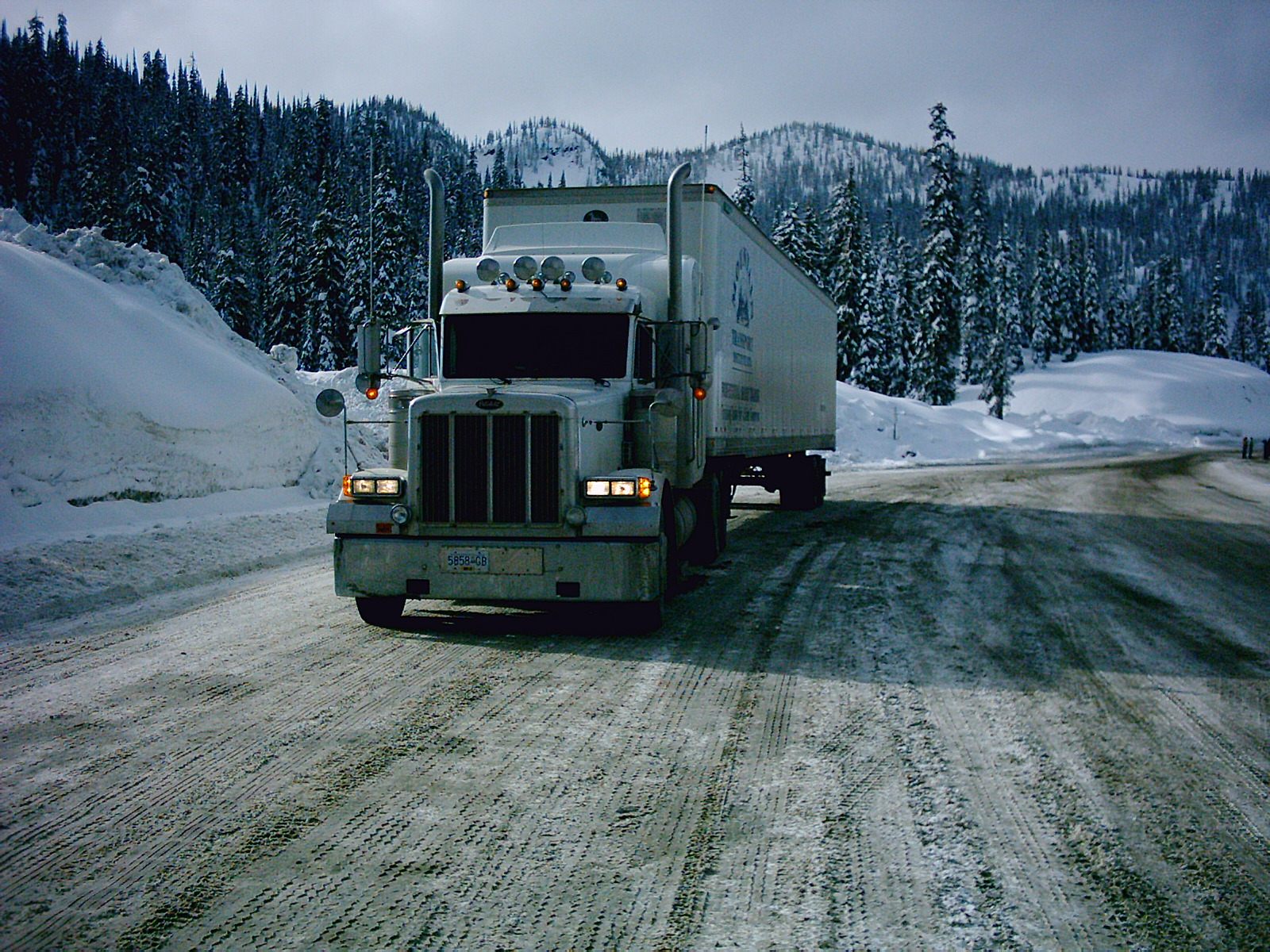
Fleet margin cannot normally die from just one big mistake, in fact it is more common that more than one problem adds and takes away from the trucking business profits. In the majority of trucking companies, planning inefficiencies lead to the gradual erosion of the margin – mile after mile, decision after decision – caused by bad planning that is hard to detect on the surface but, in the end, is outrageously expensive. Bad planning doesn’t show up as one single item on a balance sheet; it is embedded in the variation of fuel, the increasing of maintenance costs, the intelligent use of assets and operationally friction that, together, incrementally inflate the total cost of ownership.
In fleet management, margin is not just about negotiated rates or driver productivity. It is the result of how well vehicles, routes, maintenance, and data are planned and synchronized. When planning breaks down, poor planning’s costs pile up on logistics, asset management, and daily execution — often without being noticed immediately.
This article illustrates the main areas of loss that arise from improper planning and thus corrode fleet margin and it also presents the typical reasons why these issues appear even in fleets that are seemingly operationally active.
Planning Loss Areas Table
| Area of loss (as described) | Typical loss scenario (as described) |
| Inefficient Route Planning and Invisible Fuel Loss | stop-and-go traffic, idling at repeated times, poorly-timed entrance to the major cities, and unnecessary detour |
| Poor Maintenance Planning and Escalating TCO | Repairs in emergencies, unscheduled downtime due to breakdowns, extra cost additions on towing, and lower driver productivity |
| Underutilized Assets and Planning Blind Spots | Vehicles may interconnect is often switch empty and long, or waste time waiting, repositioning in an inefficient way |
| Lack of Data Monitoring and Delayed Decisions | Static routes are not updated. High-cost vehicles stay on the roster without a checkup, Maintenance patterns go unnoticed until expenses spike |
| Poor Coordination Between Planning Functions | Siloed operations of route planning, maintenance planning, and asset management, each optimizing locally while defecting all the system |
Inefficient Route Planning and Invisible Fuel Loss
Fleet Management & Fleet Planning
Among the common errors in the planning process in trucking is utterly disregarding the subject as a key problem and thinking that the route plan is already a solved problem. Thus fleets that are based on basic navigation programs or operate with static routes that easily ignore traffic patterns, congestion windows, elevation, or delivery sequencing interrelatedly influencing fuel costs frequently make the wrong decision.
Inefficient routes seldom cause dramatic extra miles instead they cause:
- stop-and-go traffic
- idling at repeated times
- poorly-timed entrance to the major cities
- unnecessary detour
All of these factors cause a fuel burn increase and a driver efficiency decrease. By now, the cumulative impact of even small routing inefficiencies suffering higher fuel costs is big enough to noticeably crush fleet margin.
From the standpoint of fleet management, this is not an issue about drivers, but rather a planning management issue. Lacking the knowledge of fuel-efficient route optimation and the necessary regular reviews of route performance the fleets continue to pay for “acceptable” routes that are loaded with hidden expenses.
AVOID These Common Fleet Operation Mistakes | Ask A Fleet Expert
Poor Maintenance Planning and Escalating TCO
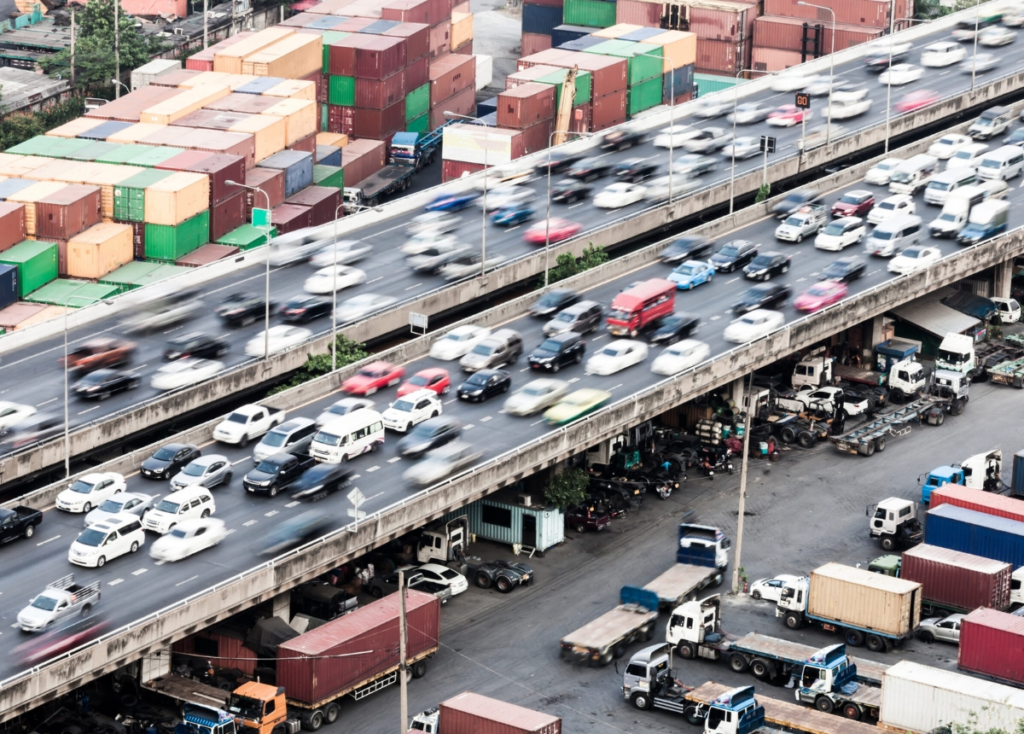
Often the maintenance expenses are one of the primary factors affecting the total cost of ownership. Nevertheless, many fleets neglect maintenance still treating it in a reactive way. Therefore, vehicle maintenance and repairs are often neglected until the vehicle shows the faults or has to be stopped in case of emergencies.
This leads to a number of new complications:
- Repairs in emergencies are more costly than the preventive maintenance, which would have caught the faults early.
- Unscheduled downtime due to breakdowns, extra cost additions on towing, and lower driver productivity are the extra losses to be taken.
- Also, more importantly, deferring repairs increases the wear of the related components which leads to higher maintenance in the long run.
The preventive maintenance is not just a mechanic’s task — it is a maintainer’s plan. Fleet owners that misalign their schedules with utilization patterns, mileage, and real operating conditions will not only pay more for the vehicle’s lifecycle but also will have to deal with lower fleet utilization.
Underutilized Assets and Planning Blind Spots
Assets that are parked are not neutral – they are losing money. Wrong vehicle planning that typically results in underutilized assets looking optically active but getting less revenue than the expenses they incur.
This may occur when load planning does not pay attention to deadhead miles, poor positioning, or wrong equipment combinations. Vehicles may interconnect is often switch empty and long, or waste time waiting, repositioning in an inefficient way. These losses of vehicles are humble as they are “moving,” whereas the mile margin being reduced is really obtuse.
The right asset management implies both total miles driven and the actual vehicle contribution to fleet utilization. In the absence of structured planning founded on telematics and data monitoring, fleets often misunderstand how they perform productivity-wise.
Lack of Data Monitoring and Delayed Decisions
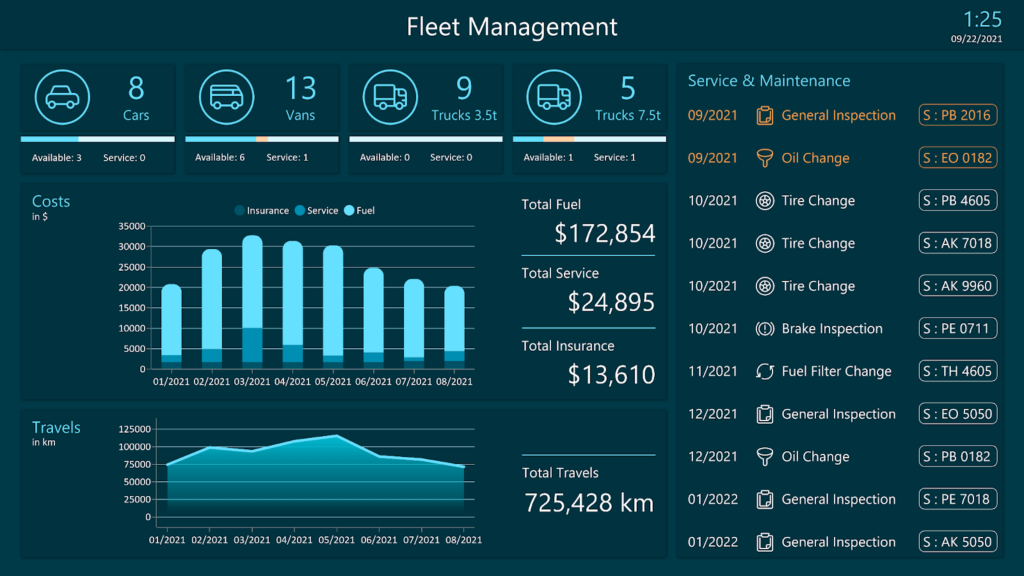
Telematics, fuel reports, maintenance logs, etc. are some of the means earning the modern fleet makes through the generation of a lot of operational data. However inadequate planning is where the planning of these factors usually goes wrong. Data are available, but decisions are often made based on old habits or doubtful sources.
Poor data monitoring leads to the long lifespan of the loss scenarios:
- Static routes are not updated.
- High-cost vehicles stay on the roster without a checkup,
- Maintenance patterns go unnoticed until expenses spike.
By the time a fleet has activated a correct action, it has fixed the margin already these damages suffered.
Planning without data is responding to the external conditions. Fleets that do not integrate monitoring in daily and weekly planning cycles suffer from the lack of detecting the cost of wrong planning early enough to stop its erosion.
Poor Coordination Between Planning Functions
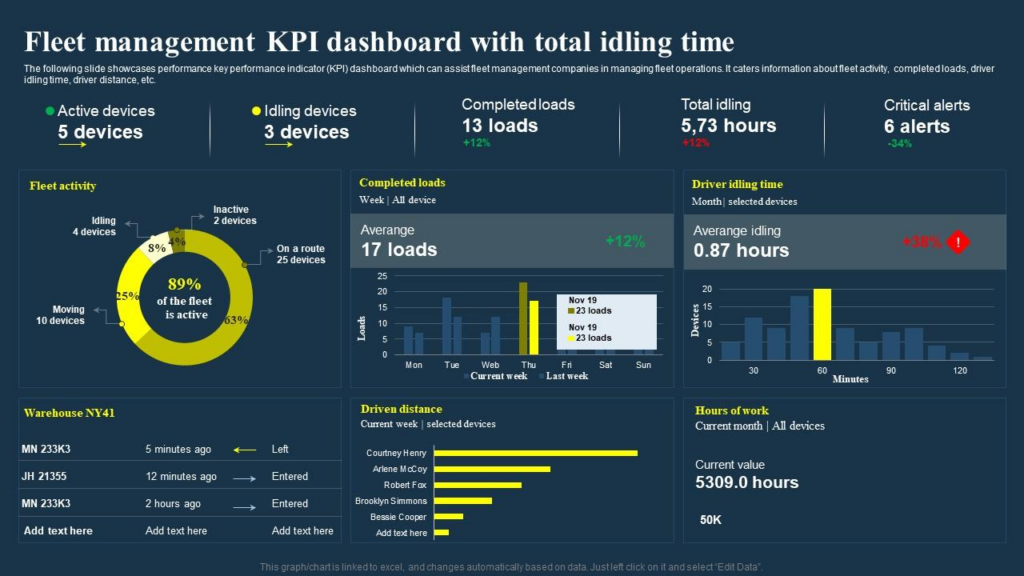
Fleet losses do not usually arise from the one-off blunders, but are typically the result of divided efforts on different fronts. Siloed operations of route planning, maintenance planning, and asset management, each optimizing locally while defecting all the system, are the common trait.
For example, dispatch might push utilization by ignoring the maintenance separations. The brief instance of shedding will subdue the decommissioned asset’s economic effectiveness as long as the route plan should not fortify the line. To this end, asset planning works with equipment mismatch to operational needs. Thus these failures in coordination will not lower the cost of ownership even when each function is apparently performing well.
Logistics, maintenance, and vehicle deployment through integrated planning is the true optimization. Without this linkage, the usual errors of the type ring, dropping fleet margin, keep on taking effect.
The Compounding Nature of Planning Errors
The plan lacks diversity and this is the aspect that makes it so obscure. The actual danger of enterprise planning missteps is not the immediate impact or fateful mistakes, but the steady and accumulative undermining effect they have. Very reasonably it can be put so that the cost of unwisely planning can linearly grow — even by small amounts — in time, resulting in enormous swathes of margin being lost.
In contrast to accidents and regulatory fines, these losses do not bring up any urgent need for a response. They just adapt. Fleets accept low margins without even realizing that planning is the cause, not the market condition.
Thus, the point is that fleet margin is improved by identifying and correcting planning behaviors precisely and not merely by cutting down visible expenses.
Frequent Planning Errors That Quietly Increase Costs
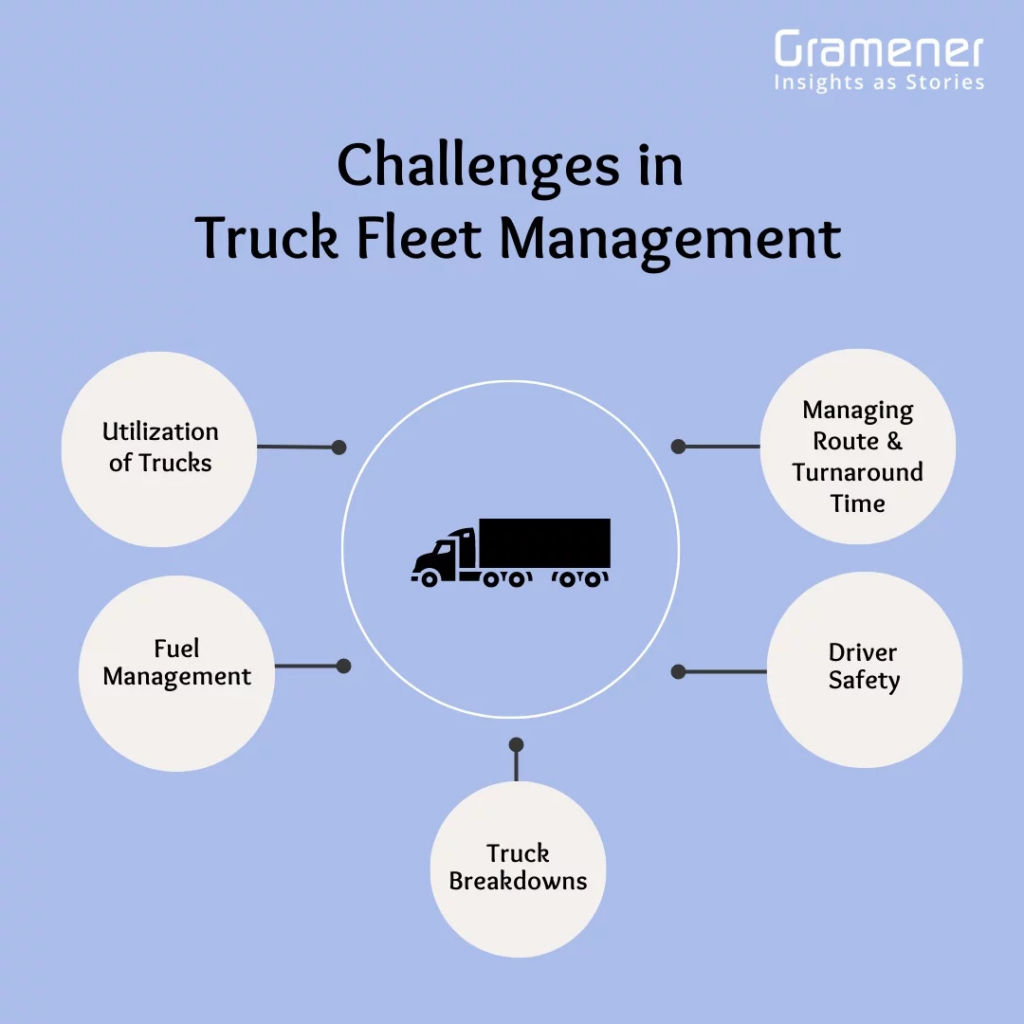
Many fleet failures are not because of complex failures, but rather because of common mistakes that are repeated on a daily basis. These mistakes usually are not alarming enough, so they do not cause any immediate concern, but they slowly and steadily add to the costs of poor planning in the entire operation. A prominent mistake is viewing planning as a set thing instead of a process that has to be done continuously. A route, vehicle assignment, and schedule are made just once and reused for a long time even though conditions have changed.
Let’s consider an example: if the routes were inefficient. A route that was okay before traffic patterns changed, customer schedule modifications, or town congestion increase is obviously no longer acceptable. however, it is still used since “it has always worked.” Over time, these routes not only increase the fuel burn but also exceed the driver hours, and reduce the on-time performance, with no additional miles added to prove the problem.
Yet still, there is another frequent error that vehicle lifecycle realities are excluded from the plan. Fleets generally tend to send vehicles from the same route as the newer ones which are more expensive, despite the fact that they do not provide the same level of fuel consumption, maintenance needs, and reliability. This causes the fleet to have losses that only a few can detect as the truck is still running, but not really economically viable to its assignment anymore.
These planning errors build up when decisions are taken in separation. The dispatcher’s priority is to cover loads, the maintenance department’s priority is to fix the problems, and the asset managers’ priority is in the availability of the assets – no one examines how these choices interact. Consequently, the fleet looks active while in reality, it is losing margin due to friction, inefficiency, and conflict in planning priorities.
Vehicle Planning Mistakes and the Unseen Expense of Asset Drift
Vehicle planning may be among the least visible areas in fleet management but is also the one with the highest tracking of financial costs. When vehicles are wrongfully assigned, that is without considering routes, operating conditions, and the overall cost profile, the fleets will undergo a gradual incident of asset drift which in turn would make the trucks less and less profitable.
One main reason for vehicle losses is the incorrect deployment. Heavy vehicles are usually sent on short-haul routes that have multiple stops while lightweight or new vehicles are allocated to the long-haul routes which are critical for fuel efficiency. These decisions are not made intentionally; they impact the availability-based planning rather than performance-based planning. As time goes by, this difference in costs leads to more than just maintenance costs, while also depleting the overall cost of ownership directly.
Inefficient routes lead to further losses. Vehicles that are already approaching the maintenance ceiling are particularly affected by routes that have congestion, elevation changes, or where frequently idle is encountered. When the vehicle plan does not take the specific needs of the route into consideration, the fleet has to absorb the higher costs for repairs, increasing downtime, and lower utilization- all of which are due to the unaccounted trigger event.
The consequence of poor planning is not merely mechanical issues alone. It also affects the scheduling reliability, driver satisfaction, and capital efficiency. Vehicles that ought to be rotated, replaced, or retired are still in circulation just because the planning procedure does not mention their declining economic performance.
Successful vehicle planning is contemplating the relationship between asset capability and the actual situation on the route. Without such a plan, the fleet would lose margin, not through mechanical failures, but rather by low and constant economic inefficiency.
Vehicle Planning and Assignment Drift Table
| Deployment pattern (as described) | Result (as described) |
| Heavy vehicles are usually sent on short-haul routes that have multiple stops | the fleets will undergo a gradual incident of asset drift which in turn would make the trucks less and less profitable |
| lightweight or new vehicles are allocated to the long-haul routes which are critical for fuel efficiency | this difference in costs leads to more than just maintenance costs, while also depleting the overall cost of ownership directly |
| Vehicles that are already approaching the maintenance ceiling are particularly affected by routes that have congestion, elevation changes, or where frequently idle is encountered | absorb the higher costs for repairs, increasing downtime, and lower utilization- all of which are due to the unaccounted trigger event |
| Vehicles that ought to be rotated, replaced, or retired are still in circulation | declining economic performance |
The Final Thought: Margin Is Planned, Not Earned by Accident
Fleet margin is not secured by working harder, driving faster, or running more miles. It is the product of systematic vehicle planning, data-driven decision-making, and corresponding fleet management.
This is the way effects are resigned from manageable incremental costs of long-time margin loss by the power of faulty tactics. In reality, the cost of poor planning accumulates quietly across routes, maintenance cycles, utilization gaps, and asset misalignment. On the contrary, strategic optimization across routes, maintenance, utilization, and asset management allows full control of total cost of ownership and also provides resilience against possible market disruptions.
Marxist analysts will tell you that in the trucking business, margin won’t vanish like a thief in the night — it plans its escape carefully through everyday decisions, or it is preserved deliberately, one disciplined choice at a time.